
Making the world a better place . . .

                                                       one SMILE at a time!

The Orthodontic Practice

of Dr. Richard E. Crowder

7015 E. Central

Wichita, KS  67206

316-683-SMILES (7645)

smiles@smilesortho.com


Home Feedback Contents Search Overview


Up
How Braces Work
Tx Plan
No no foods
Damon SL System
Retainers
Invisalign


Why a specialist?

Teeth and sometimes faces are permanently changed by orthodontic treatment.  An orthodontic specialist is an expert at moving teeth, helping jaws develop properly and working with you to help make sure the teeth stay in their new positions.


Why is orthodontics important?

an attractive smile and improved self-image is just one of the benefits of orthodontic treatment.  Alleviating and preventing physical health problems is just as important.  without treatment, orthodontic problems can lead to tooth decay, gum disease, bone destruction, chewing and digestive difficulties, speech impairments, tooth loss and other dental injuries.


How can I tell if my child needs orthodontic treatment?

It is usually difficult to know if your child will need orthodontic treatment until your child is 7-12 and their permanent teeth start to come in. We recommend that you bring your child in to Dr. Crowder when your child is 7 to evaluate whether treatment will be needed. Generally, Dr. Crowder will evaluate your child, and if your child needs treatment, he will take corrective action to avoid costly and painful treatment later on.


How Can I look for early signs of Orthodontic problems?

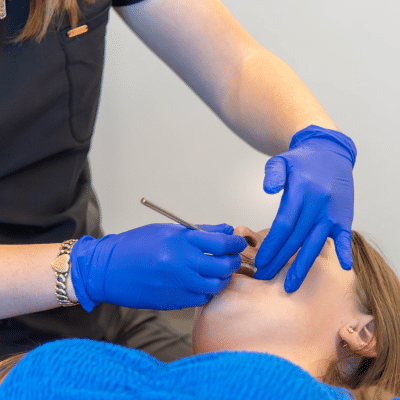
First ask your child to open their mouth, and let you look at their teeth. Are all of their teeth straight? Do any of the teeth slant to the side? Are there any gaps between your childs teeth? Do any of your child's teeth overlap? If you see any signs of crooked teeth, gaps between your childs teeth or overlapping teeth, your child will need orthodontic treatment.

Next ask your child to bite down. Does the center of the front top teeth line up with the center of the front bottom teeth? Do your child's top teeth protrude out the front of their mouth? Does your child have bucked teeth? Do the top front teeth cover more than 25% of the bottom teeth? Are any of the top teeth behind the bottom teeth? Do the teeth come together smoothly, or are there any gaps? If your childs teeth do not come together smoothly, or if any of your childs teeth do not lining up properly your child will need orthodontic treatment.

Now look at the alignment of your childs jaw. Do all of the teeth come together smoothly, or does your childs jaw shift off center when your child clenches their teeth together? If you see any misalignment or shifting of your child's jaw, your child will need orthodontic treatment.

If you see any of the above symptoms, or if you are not sure, bring your child in for orthodontic treatment. Do not wait hoping that the problems will go away.


First Treatment

First appointment, first grade, but no later than age seven.  In some cases, treatment is required at an even earlier age.  Early treatment may mean that a patient can avoid surgery and more serious complications.  Many orthodontic problems are easier to correct if detected at an early age before jaw growth has slowed.  It is most important to examine your child's teeth for bite problems as the permanent teeth grow in.  The problem of poorly arranged teeth will not correct itself as your child ages, and the space available for front teeth does not increase after the permanent six year molars erupt.  Many orthodontic problems are easier to correct if detected at an early age before jaw growth has slowed.


What is involved with Orthodontic treatment?

This is for patients and for parents of young patients who are about to start a course of orthodontic treatment.  Dr. Crowder will devise a treatment plan specifically for you, involving procedures appropriate for your individual situation and goals.  If there are hazards or limitations specific to your treatment, Dr. Crowder will explain them to you.

Like any treatment of the body, much of Orthodontics success depends on the understanding and cooperation of patients.  Please ask Dr. Crowder to explain anything you do not understand.  Clarify what is expected of you as a patient, or as a parent of a young patient, to achieve the best results.  Keep in mind that with orthodontic treatment, results are dependent on the cooperation of the patient.

Before treatment begins you will be asked to sign an informed consent form on you own behalf or on behalf of your child, verifying that you understand the potential problems and hazards of orthodontic treatment.


Dentofacial orthopedics

When most people hear the term orthodontics, they visualize the process of straightening teeth, but orthodontics also includes dentofacial orthopedics, which relates to the alignment of the jaw bones as well as the teeth.  the most common problem orthodontists are called upon to treat is tooth crowding, but common orthopedic problems can involve an upper jaw which is too protruding or a lower jaw that has grown forward.  these problems of jaw growth are more easily treated in children, but similar problems in adults can frequently be camouflaged by adjusting the teeth.


Age

Because healthy teeth can be moved at any age, we can improve the smile of anyone at any age.  Dr. Crowder has treated several patients in their 50's and older, but its best to seek treatment at an early age, while the jaw is still growing.


Treatment Duration

While we can give you an estimate, there is no way to tell exactly how long your treatment will take.  Individuals are all different in their response to orthodontic forces, so treatment may take more or less time that our estimate.  Our main concern is that treatment be consistent with tissue health and provide minimal discomfort and maximum stability.


Orthodontic Differences

An orthodontist is different from your regular dentist.  Dr. Crowder is a dental specialist who corrects dental and facial irregularities.  Dr. Crowder is an expert at moving teeth and helping jaws develop properly.  Orthodontists and dentists are both necessary elements in your dental health care treatment.


Causes of Crooked Teeth

Features, including misalignment, of teeth and jaw can be inherited, the same way we inherit our eye color.  However, other factors, such as finger sucking, too many cavities, gum disease, trauma and premature tooth loss can contribute to a bad bite.


Patient Responsibility

Your orthodontic treatment will not be successful unless you comply with the directions given by Dr. Crowder.  Typically, your responsibilities will include correct use of your orthodontic appliance, meticulous hygiene, care of your appliance, keeping scheduled appointments and visiting your dentist for regular check-ups and cleaning.


If you did not find the answer to the question (s) you were looking for, please go back and check the other categories, or send us a comment so that we may get back with you.


Thank you for visiting the world of 


Send mail to the webmaster with questions or comments about this web site.
Copyright © 2009 Richard E. Crowder D.D.S.